Hotel of Bees
All the Light We Cannot SeeThe Hotel of Bees is a Saint-Malo landmark whose successive identities—from a privateer’s house and seaside hotel to a fortified anti-aircraft position—trace the conversion of ordinary civic space into military infrastructure. Its bee imagery and centuries-old rooms endure alongside shell crates, a gun emplacement, and the cellar where Werner Pfennig operates a radio. The hotel’s destruction in the bombardment gives that transformation a material ending: the building that had been turned into a fortress is lifted by fire and falls apart.
History and Architecture
Five centuries before the events of the novel, the site was the home of a wealthy privateer who gave up raiding ships to study bees in the pastures outside Saint-Malo. The building retains traces of that earlier life: bumblebees carved into the oak crests above the door lintels and an ivy-covered courtyard fountain shaped like a hive. The hotel’s most distinctive interior decorations are five faded ceiling frescoes in its grandest upper rooms. They show enormous bees against blue backgrounds, including a nine-foot-long queen above a hexagonal bathtub. These details make the building’s name more than a sign; bees recur in the house’s carved, painted, and architectural forms.
Later, the former residence became a hotel with twenty-one guest rooms and views of the sea. Its public face was notably different from its eventual wartime function: blue shutters, a café serving oysters on ice, and a bar where Breton waiters polished glasses. Parisians came for weekend holidays, and earlier visitors included ministers, vice ministers, abbots, admirals, and corsairs. A lobby fireplace as large as a truck and the hotel’s commanding views belonged to a place designed for hospitality and display. The building’s history therefore contains several changes in use, from private residence to commercial lodging and, finally, military position.
Conversion into a Strongpoint
During the occupation, an Austrian anti-air detachment changed the hotel into a fortress over the course of four weeks. Soldiers boarded up every window, overturned the beds, reinforced the entrance, and packed artillery-shell crates into the stairwells. The building’s upper floors were no longer simply rooms for guests: the fourth floor’s garden rooms, whose French balconies opened directly onto the ramparts, became the position for an 88-millimeter anti-aircraft gun. Its shells weighed twenty-one and a half pounds and could travel nine miles.
The soldiers called the cannon Her Majesty. They maintained it with oils, fresh paint, and lubricated wheels, while sandbags gathered around its base. The narration compares their tending of the weapon to worker bees caring for a queen, bringing the hotel’s old bee imagery into sharp and uneasy contact with its new military purpose. The gun is presented as a monarch intended to protect the garrison, but its presence also makes the former leisure hotel part of the machinery of war. Its rooms, entrances, and circulation spaces have been repurposed around the needs of a weapon.
The Cellar and the Radio
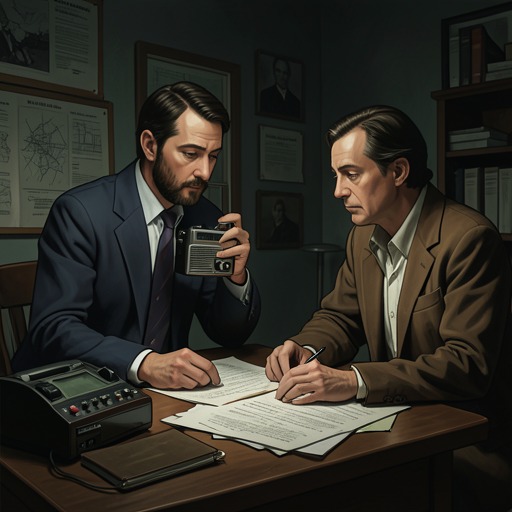
Beneath the lobby, a corsair’s cellar has been cut into the bedrock. Its granite walls and three massive hand-hewn beams preserve a sense of the older structure beneath the hotel’s altered surface. A single bulb illuminates the space, where Werner sits at a workbench on a folding chair. The cellar is neither a guest room nor a gun platform: it is a concealed working space from which he operates a steel-cased two-way transceiver.
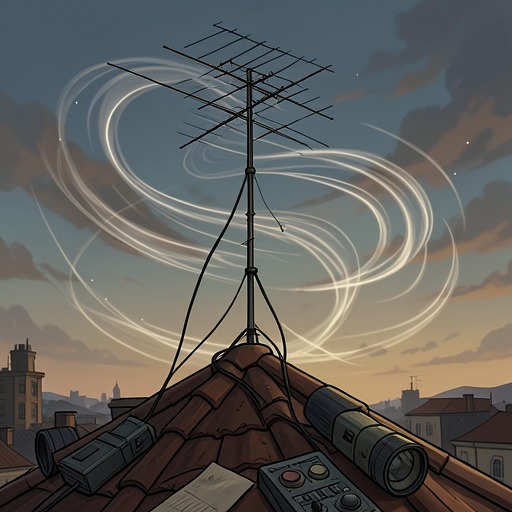
The radio’s 1.6-meter-band antenna allows Werner to communicate with a matching transceiver upstairs, two other anti-aircraft batteries within the city walls, and the underground garrison command across the river mouth. The location thus joins the hotel’s two wartime functions: the visible gun above and a communications network below. Its placement beneath the lobby also gives the building a layered military geography, with the cellar’s rock and beams sheltering the equipment while the floors above have been reorganized for defense. The contrast is especially marked against the hotel’s earlier purpose as a public place of meals, rooms, and sea views.
Destruction and Narrative Significance
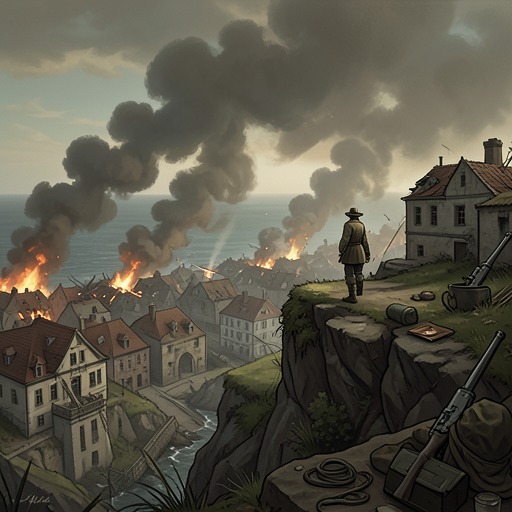
The hotel’s military conversion does not save it from the bombardment of Saint-Malo. During the fire, the building on rue de la Crosse is described as becoming almost weightless for a moment, lifted in a spiral of flame before raining back to earth in pieces. The image reverses the solidity emphasized by the cellar’s granite and ancient beams: even a structure rooted in bedrock and strengthened for war is not secure against the destruction consuming the city.
Werner’s account of the attack is tied to the cellar. He remembers Bernd closing the cellar door and sitting on the stairs, and Frank Volkheimer in a chair before the ceiling bulb goes out and the blast overwhelms the room. The recollection makes the hotel’s destruction more than a change in the cityscape; it is also the collapse of the enclosed space in which the men had been gathered. At the same time, the building’s earlier histories remain legible within the scene: a former corsair’s cellar lies beneath a hotel once associated with visitors and leisure, while the military installation built into it is caught in the fire.
As a location, the Hotel of Bees concentrates the novel’s contrast between continuity and rupture. The carved bees, frescoes, and cellar beams preserve elements of its past even as occupation alters its rooms and installs a gun; the bombardment then breaks apart the building itself. Its history is not a simple progression from one function to another, but a layering of uses whose traces remain together until the hotel is destroyed.